Alex Brogan
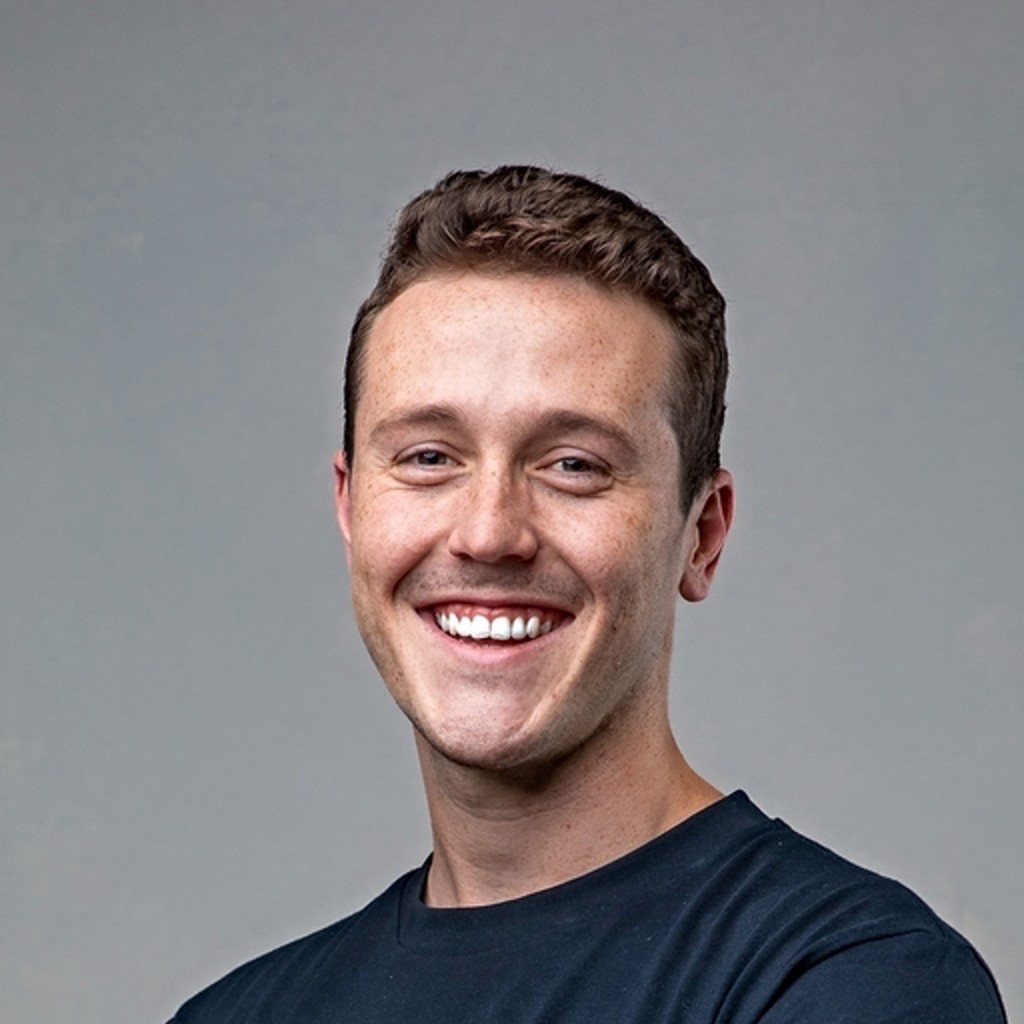
I'm an Australian entrepreneur, investor, and amateur writer.
“Either write things worth reading, or do things worth the writing.”
— Benjamin Franklin
Twitter · LinkedIn · Instagram
About
Grew up in Perth, Western Australia.
Played water polo for Australia.
Graduated from the University of Western Australia as valedictorian.
Investment banker at Goldman Sachs from 2018 to 2021.
Founded Intelligence Age, an AI media company, and sold it in 2024.
Founded Faster Than Normal, a media platform studying the most successful people and companies in history.
Lifelong obsession with competitive games.
Love the ocean, being in or underwater, and fishing. Have travelled to 37 countries.
Top 0.005% Spotify listener of RÜFÜS DU SOL.
Enjoy meeting people who are two standard deviations from the mean on one or multiple vectors.
Oscillate between deeply serious and deeply unserious, with little in between.
Live in San Francisco.
Writings
Portraits of my life
16
- Life is short and fleeting
- The high-return activity of raising others’ aspirations
- Don’t compare your 1st iteration to someone else’s 100th
- How you do anything is how you do everything
- Great leaders don’t just manage people
- Preparation kills anxiety
- Valedictory address, University of Western Australia (2018)
- If you’re not curious, you’ll never be great
- 25th year of learnings
- 26th year of learnings
- The whole world is insecure
- We judge ourselves by what we know we’re capable of
- Ten years of therapy in one week
- 28th year of learnings
- My grandfather, William Francis Brogan (1931–2026)
- Letter to a friend that compares themselves to others
Life & work
13
- There is no secret sauce
- On agency
- Career things I’d tell my younger self
- Increasing returns to focus
- How to find your life’s work
- What I learned at Goldman Sachs
- Reading character
- Help this person
- The fruits of reading
- Disruptive vs. incremental
- Australia’s ambition problem
- Human flourishing
- A few of my favourite parables
Artificial intelligence
4
I’ve been lucky to be involved with the early rounds of:
- BetterBrain
- Migrate Mate
- Superpower
- Matilda
- Solea AI
- OneMRI
- Adamo
- Maple
- Roam
- Lyngo AI
- Fourday AI
- Beehiiv
- Piris Labs
- Athyna
- Supercharge
- Natura
- Squaretower
- Beckley Retreats
- Capable
- Mextropic
- Coherence
Questions I'm currently thinking about
- How do you measure the contribution of a venture capital firm to human flourishing — and what changes when you can?
- What is the rate-limiting factor in humanity's collective learning rate, and what would it take to remove it?
- What would it take to build an oracle for the world — a system that processes social, market, and research signals into a real-time map of what's actually happening?
- What does scientific publishing look like once AI automates most of the research it was built to disseminate?
- What are the next categories of genuine scarcity in a world of abundant intelligence?
Beliefs
The principle of optimism is the only defensible default. Anything that isn't a law of physics is moldable, given sufficient knowledge, time, and the right people.
Intuition is compressed evidence, not feeling. When something pulls at you across years, it is thousands of unindexed observations your conscious mind hasn't yet decoded.
The level of ambition is essentially free. Building a $10m business and a $10bn business demand similar personal sacrifice. The latter attracts better people, better capital, and more interesting problems. Lowering ambition rarely lowers the cost.
There is rarely anything new under the sun. Almost every important company is a recombination of existing ideas applied at the right moment with better execution. Originality is overrated; cross-domain pattern recognition is dramatically underrated.
Truth-seeking has an unusually low ratio of practitioners to admirers. Most people would rather be morally just than empirically correct. The willingness to be wrong out loud, repeatedly, in pursuit of an accurate model is a rarer trait than IQ and compounds harder.
The need to feel smart is one of the most expensive habits in the world. It blocks you from looking stupid long enough to learn something genuinely new. The people who advance fastest in any field are those willing to ask the question everyone else is too embarrassed to ask.
The most useful question is usually “what does the limit look like?” What does the AI-native economy look like fully formed? What is the end state of a media business with infinite distribution? Reasoning from the limit forces you past the comfortable incrementalism that dominates most strategic thinking.
Projects I think should happen
- A gamified, interdisciplinary reading platform that maps the great books, papers, and lectures into a structured curriculum for understanding history, science, and human nature.
- “Munger's mental models for all of reality” — a comprehensive, cross-disciplinary framework taxonomy with predictive applications to history, markets, and human behavior.
- An open, AI-searchable database of global research papers that auto-translates academic findings into commercial opportunities with built-in market sizing and competitor analysis.
- A public, continuously updated repository summarizing the state of knowledge across every major field, distilled from interviews with top researchers (e.g., “where we are on antiviral drug development”).
- An interactive world history platform that turns timelines, causal chains, and primary sources into navigable, explorable maps rather than static text.
- A mentoring network for young men built around accomplished, non-toxic role models — the antithesis of the Tate ecosystem.
- A public global leaderboard of scientists ranked by publications, citations, replications, awards, and commercial output — designed to make scientific contribution visible outside academic bureaucracies.
- A neglectedness dashboard mapping global problems by sector, venture funding, and research output, operationalizing the EA ITN framework for funders and founders.