Letter to a friend that compares themselves to others
These thoughts were prompted by a recent conversation with a friend feeling a heavy weight of comparison to others. As I crafted them I realised the universality of comparison, how poorly we do it, and its relationship to envy—which only hurts us.
What I discovered was that most comparisons are invalid because the people involved have different starting points, games, and time horizons. And even valid comparisons need not produce envy. They can provide information, motivation, and opportunity.
Learning to compare like with like, remembering that you are seeing one frame of a life still unfolding, choosing your own game, and treating the people ahead of you as guides rather than threats—all are ways to turn comparison from a source of envy into a tool for growth.
I. Introduction
Dear X,
I’ve noticed that our conversations often return to who is doing what, who is ahead, and what their progress says about your own. I don’t think this means you compare yourself more than everyone else. I think you are simply more honest about it. Comparison is universal. Admitting how much it affects us is not.
“We can often be vain of our passions, even the guiltiest ones; but envy is so sneaking and shameful that we never dare confess it.” —François de La Rochefoucauld

To admit you envy someone is to openly acknowledge that they possess a superior quality, talent, or status that you lack. It is to say—they are more, and I am less. It is to declare inferiority. And this is the antithesis of what’s required to build self-belief.
In July 2012, when I was fifteen, I traveled to Belgrade in Serbia with my club water polo team. We were training at Partizan, arguably one of the world’s most famous clubs, known for its long list of Olympians. I remember the feeling of excitement at being able to test myself against the best. That feeling quickly turned to dejection as we started and finished the game against a team two years younger than us and lost by about fifteen goals. As a naive fifteen-year-old who wanted to be the best at everything he did, this felt like a crushing defeat. I felt, in some sense, that I should just give up trying to be the best at water polo.
The next day, back at the aquatic center, I came across a separate twenty-five-meter pool with dozens of players swimming in straight lines in soldier-like fashion, doing strength drills. As I got closer, I noticed how young they looked. I asked the coach how old they were, and he told me that they were only six. In other words, these thirteen-year-olds we’d lost to had been swimming lengths since before they could spell their own names. We, on the other hand, had collectively only started playing by the age of eleven. We’d turned up to a knife fight with a toothpick.
In that moment, I learned more about comparison and envy than I had in my lifetime. I realised it was futile because it’s never really apples to apples. And yet, as humans, we instinctually compare apples to apples.
Our net worth versus their net worth. Our title versus their title. Our followers versus their followers. Their friends versus our friends. The speed of their rise. The size of their house. And their age relative to ours when they achieved what they did.
There is nothing inherently wrong with comparison. In fact, I think that “stop comparing yourself to others” or “comparison is the thief of joy” is the wrong advice. I have heard it, and I have tried it, and I do not believe it. Comparison shows us what’s possible, reveals what we want, and tells us how we can be better. The problem is the crude way we practise it—and the envy through which we interpret it. We do not need to stop comparing. We need to become better at it.
II. The quality of comparing to the right thing
I want to offer the following simple model to make comparison more useful. A source of information rather than a source of envy.
Comparability ≈ similarity of starting conditions (S) × similarity of game (G) × similarity of time spent playing (T)
Where:
- S = similarity of starting conditions
- G = similarity of the game being played
- T = similarity of time spent playing
In other words, the credibility of a comparison increases according to the alignment between three factors:
- Your starting position
- The game that you’re playing
- The time horizon
This is a heuristic, not a literal equation: the less aligned any one of these factors is, the less weight you should place on the comparison.
In the 38 letters to his son, John D. Rockefeller shares one of the most useful framings about the importance of a starting position in one’s outcomes in life.
“Think of our world as a high mountain. When your parents live on the peak of the mountain, you are destined to not live at the foot of the mountain; likewise, when our parents live at the foot of the mountain, you are destined to not live on the peak of the mountain. In most cases, the status of parents will determine the starting point of their child’s life.”
Here, I often think of the nepo babies in venture capital who benefit from an incredible foundation of both social and financial capital. Venture capital is increasingly purely a social capital game, so this has outsized influence on outcomes. Here, I also think of examples of entrepreneurs that have come from wealthy families who are able to take risk from an early age because they’ll never actually face the risk of ruin. Here I think of Winston Churchill, who was raised in the British aristocracy and benefited from political relationships that would have been the envy of many, and that helped him form important relationships throughout politics and media that no doubt propelled him to the prime ministership.

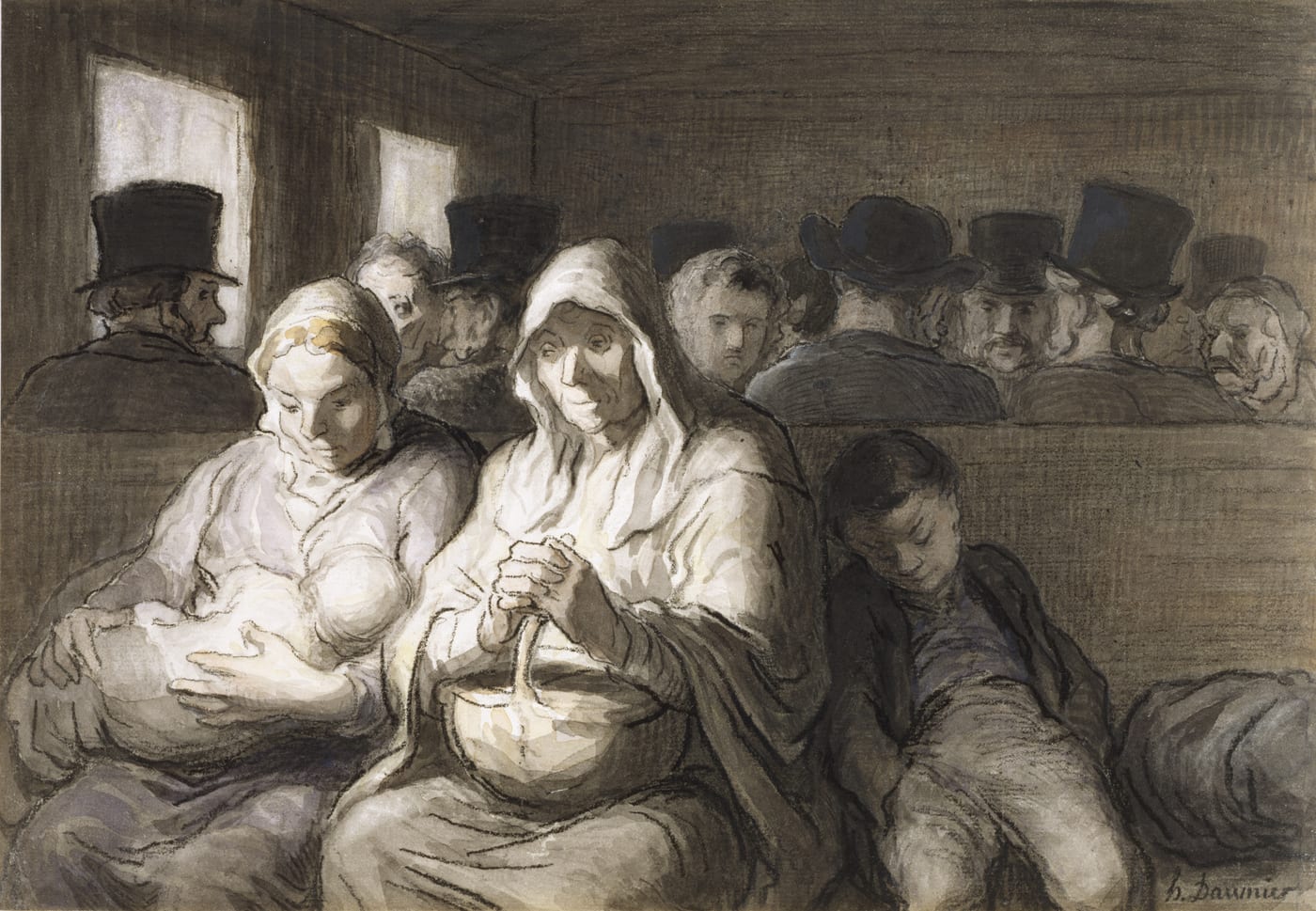
It should be obvious that comparing yourself to someone playing a different game is futile, but there is a level of specificity that’s important to understand. For example, you might think that two entrepreneurs (one based in Australia, who builds a healthcare startup, and another based in the United States, building an AI startup) are both playing the game of startups. These entrepreneurs, particularly if, say, they are both Australian, would no doubt compare themselves. And this might feel reasonable to both of them. But I beg to differ: these are fundamentally different games! Different regulation. Different capital. Different business models. Different tailwinds. Different country, different game—the comparison was void before either founder made it.
Additionally, games can take on a more individual characterisation. That is, the entrepreneur who has chosen to move to America is arguably, but not necessarily, sacrificing more or putting more on the line, all else equal (starting position and time horizon), in that they are removing the comfort of their home country. In other words, they have changed their inputs, or what they are willing to give to the cause. A further example of this might be purely the number of hours or sacrifices one is willing to make while playing the game. If your inputs are not the same as someone else’s, who is, from the external view, playing the same game, you are not really playing the same game. You’re playing the game in a different way, and resultingly, you should expect your outcomes to differ.
The factor of time horizon should be clear from my Belgrade example. Simply put, comparisons to people who have played the game longer are not credible.
III. Frames of a film
Assuming all of these factors—the starting position, the game you’re playing, and the time horizon—are the same, I want to offer an additional saving grace to those falling into the trap of comparison.
In October 1929, a man named Jesse Livermore was short the market. At age 30, he was already worth, inflation-adjusted, $3 billion. The same week, a New York property developer called Abraham Germansky, who had borrowed to go long, lost everything.
Morgan Housel describes this story in The Psychology of Money: the last anyone saw of Germansky, he was tearing a strip of ticker tape into bits and scattering it on the sidewalk as he walked toward Broadway. “And that, as far as we know, was the end of Abraham Germansky.”
If you’d compared the two men that week, the lesson would have been obvious, but here the film keeps running. Livermore, now certain of his own genius, bet bigger. By 1933, he was broke and ashamed. In 1940, he took his own life. In a week Livermore made three billion dollars; in four years he lost every cent of it; in eleven he lost his life. And Germansky, who lost everything that same week, was still alive.
The lesson here is that a comparison is only one frame of a film that is still running. The thing you are measuring is a trajectory, and you’ve only sampled a point. The frame shows position; only the film shows direction. The frame shows who is ahead; only the film shows who is climbing. And a frame taken in October 1929 would have told you, with perfect confidence, that Jesse Livermore had won. The game of life continues until death, and until death, I would argue that the only defeat is psychological.
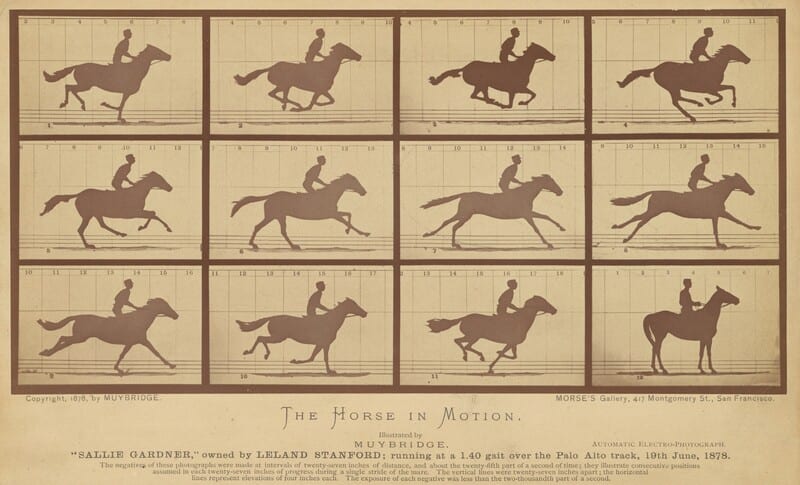
To illustrate this in another way, I want to share one of my favourite parables. The story goes:
There was a farmer in a small village with a single horse who helped him earn a living for his family. The other villagers constantly told the farmer how lucky he was to have such a great horse.
“Maybe,” he would reply.
One day, the horse ran away. The villagers came to the farmer to express their sympathies.
“Your horse ran away. How unfortunate!” the villagers exclaimed.
“Maybe,” the farmer replied.
A few days later, the horse returned home, with ten strong wild horses in tow.
“What good fortune. What incredible luck,” the villagers crowed.
“Maybe,” the farmer again replied.
The following week, the farmer’s son was riding one of the wild horses in the fields, when it kicked him off and broke his leg.
The villagers arrived to express their dismay.
“What dismal luck,” they said.
“Maybe,” the farmer replied.
The next month, a military officer marched into the village, recruiting able-bodied young men for the war. The farmer’s son, with his broken leg, was left behind.
The villagers were joyful, “Your son has been spared. What beautiful luck!”
The farmer simply smiled.
“Maybe.”
The lesson is that even when our comparison passes all three tests, we can still be measuring the wrong thing. Indeed, the cyclicality of life is a fact of life. Throughout life, you will suffer while others are winning; you will win while others suffer. Your character will be created in the moments of suffering. And the film doesn’t stop for either of you, until it does.
So let the film run. Let it run, let it run, let it run—because the scene you are in is not the full story.
IV. Which game are you scoring?
Perhaps an even more useful question to ask when you’re comparing yourself on some dimension against another person is: Do I actually want this thing? Or do I just want to want this thing?
For the Girardians among us, you’ll recognise that I’m referring to mimetic desire here. In simple terms, we want what other people want, and we learn what to want by watching them. Often we do this subconsciously, only to realise one day that the things we thought we wanted aren’t actually what we want. The world is designed to make us feel like we should want a lot of different things, and so mimetic desire is a universal trap we fall into.
I’ve previously written that the first honest question one should ask about their career is whether it was a mimetic choice. Did you go to law school because your smart friends were going to law school? Did you do medicine because that’s what your parents wanted for you? When other people desire something, we have an uncanny ability to think we want it, too—before and without inspecting that belief deeply.
The more authentic approach is to arrive at your desires independently. The way to do this is by distinguishing between thick and thin desires. Thick desires are ones that survive changes in your circumstances and across time. They often express your individuality and are arrived at not because of, but despite your environment. For example, the young founder wants to build a particular product that’s far away from the consensus because they’ve felt the problem personally and remain compelled to solve it. In general, thick desires tend to persist even when the surrounding status incentives for holding onto them disappear.
Thin desires are ones that you inherit by nature of your environment. They’re highly mimetic, contagious, and often shallow. The investment banker at Goldman Sachs wants a house in the Hamptons. The founder wants the inflated valuation. The hot girl in San Francisco wants the virality on Twitter, because… that’s what every hot girl in San Francisco wants. None of them wants the thing; they want the credential, because that’s what everyone else sees.

Another way of thinking about this is through the famous question that Warren Buffett asks about people:
Would you rather be the world’s greatest lover, but have everyone think you’re the world’s worst lover? Or would you rather be the world’s worst lover but have everyone think you’re the world’s greatest lover?
His point, in Alice Schroeder’s biography: “The big question about how people behave is whether they’ve got an Inner Scorecard or an Outer Scorecard. It helps if you can be satisfied with an Inner Scorecard.”
When you feel envy via comparison, it’s helpful to ask: is this a thick desire (inner scoreboard) or thin desire (outer scoreboard)? To distinguish, you can ask:
- Do I want the daily reality of pursuing this, or only the identity and outcome attached to achieving it? Thin desires tend to be identity and outcome focused.
- Has this desire persisted across different environments and phases of my life, or does it intensify mainly around particular people? Thick desires tend to remain across environments and phases.
Recognising which is helpful data because it does one of two things. It points at a thick desire you haven’t admitted to yourself, in which case the right response is to admit it and go after it. Or it exposes a thin desire that you’ve borrowed from someone else, in which case the right response is to drop it and feel lighter. Either way you learn something valuable.
What if you are young (<35 y/o) and still collecting information about what you want? Then choosing a direction is less a matter of knowing yourself than of searching for yourself.
We are currently failing the majority of young people by forcing them down narrow career routes early in their lives, without exposing them to the entire map that the world offers. Here, I think of the vast numbers of my friends who went into law or medicine because their parents did. They made this decision (or it was largely made for them by mimetic desire) when they were only sixteen or seventeen years old. What does a sixteen-year-old know about the shape of a life? Often, though not always, not very much.
To make this more concrete, imagine you are beginning life in a vast mountain range covered in fog. You could see the ground immediately around you, but not the landscape as a whole. Somewhere in the mountain range is a hill especially well suited to you. This is the hill whose climb you would find most meaningful and whose summit would give you all of the success you could dream of. The problem is, you can’t know where it is from where you begin.
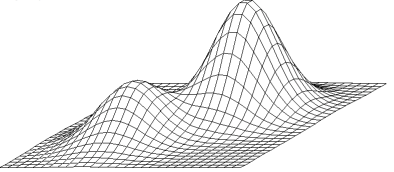
So how does one solve this problem? The most obvious strategy is to walk directly uphill from where you are standing. Each step will give you confidence that you’re making progress. The view improves. The terrain falls away beneath you, and other people congratulate you for going higher. If you’re especially splendid and ambitious, you might ascend very quickly.
But there’s a problem with this strategy. Walking uphill can only tell you how to reach the top of your current hill. It can’t tell you whether you chose the right hill in the first place. The fog hides the wider landscape. A nearby hill might be significantly higher, more interesting, and better suited to your abilities, but discovering it requires you to stop climbing, to walk back down, and to spend some time in the valley.
The environment (country, state, city, school, etc.) we start our lives in is akin to this situation. The lucky among us have opportunity to see more parts of the map early in life, but many of us don’t. As a result, we end up on the lower hill without ever questioning whether there’s a higher hill, better suited to us.
To make matters worse, ambitious people are excellent hill climbers. Every step up on the lower hill is rewarded with more status and money.
When someone walks away from the top of a lower hill, when they go down through the pay cut and the funny looks and the long trough of low status, when they begin again at the foot of a taller one with nothing to show for it but the choice—then, and only then, do you know the desire was their own. My version of this was leaving a cushy, high-paying role in the Goldman Sachs Investment Banking team to take an entry-level sales role at a startup because I wanted to get into technology and learn how to sell. Leaving Goldman Sachs for an entry-level sales job was not the most popular decision I have ever made. It was also not without its rewards.
The reason this is hard is because it feels like you’re starting over… in fact you are… so not many people do it—it’s a moat. What many don’t realise is that it makes sense to do this because you have better information about the different pay-offs associated with different hills as you get older (see multi-armed bandit problem).
How does this all relate to comparison? There are many ways you can interpret this, which I’ll let you ponder. But I’ll leave you with two:
- What a perfectly miserable way to spend a life it would be climbing the wrong hill, comparing yourself to someone or something you don’t even really want.
- If you know you’re on the right hill and still comparing yourself to others, be grateful you’re not stuck on the lower hill. You just need more time.
V. Repeated games, non-rival goods, and zero-sum thinking
Repeated games
In game theory, repeated games are games where the same players interact again and again, allowing what happens in one round to shape what happens in the next. Most of life is like this. A career is a repeated game, and so is a field, and a city, and an industry, and a friendship group, and every one of them is played with the same people for decades.
In repeated games, the most successful strategies tend to be reciprocal. This means that you should cooperate first, punish defection, and forgive quickly if cooperation returns. In the 1980s, political scientist Robert Axelrod held several famous tournaments and called this the tit-for-tat strategy.
The important lesson here is that trustworthy cooperation usually compounds better than trying to win every encounter at someone else’s expense. Inherent in the feeling of envy is the notion that we should be winning at someone else’s expense. When you compare yourself with others and become envious of them, you’re making the mistake of applying a one-time instinct to a game that will continue indefinitely. You’re treating the current situation as the end point and assuming that only one person can come out on top, when actually, their success today may create your opportunity tomorrow, just as your success may later create theirs. The game goes on, so let the film run.
Positional goods, non-rival goods, and zero-sum thinking
“Beggars do not envy millionaires, though of course they will envy other beggars who are more successful.” —Bertrand Russell
Envy is usually local. We don’t envy people whose lives feel alien to our own. We envy those whose starting points, ambitions, and circumstances match ours. When their success feels close enough to have been ours, we interpret their rise as evidence of our failure.
The hard thing is, some contests really do work this way—where rank is relative. For example, a prize can have only one winner, a particular promotion can go to only one person, only one person can be captain. In these narrow contests, another person’s gain may be your loss.
But outside a narrow universe of contexts, we too often confuse relative position and absolute position. A friend’s success may move them ahead of us in a relative sense, on some narrow dimension—like net worth, but that doesn’t mean they take anything away from us. Indeed, because friendship is a repeated and connected game, their success probably improves our prospects through everything they learn, build, and share with us. The people whose success feels most threatening are often the people whose success is most likely to benefit us.
This is why celebrating a friend’s success can be harder—and more revealing—than comforting them in failure:
“Anybody can sympathise with the sufferings of a friend, but it requires a very fine nature—it requires, in fact, the nature of a true Individualist—to sympathise with a friend’s success.” —Oscar Wilde
The economic version of this mistake is to treat every form of success as a rival good—something of which another person’s possession leaves less for you. A prize, a job, or a title may be rival. Ideas, knowledge, and skill are not. Another person’s mastery does not leave less for you. It shows you what’s possible and helps you learn how to achieve more.
That is the category error: we mistake relative position for absolute possibility—we see them rise, and think we fell. When really, their rise may have enlarged the field for both of us. Their success does not prevent yours. In a repeated, connected game, it may become one of the causes of yours.
This leads me to a more helpful way to think about the different categories of people in your life:
- Your cohort. In 1957 eight engineers walked out of Shockley Semiconductor together and founded Fairchild. Their companies, and the companies descended from them, largely became Silicon Valley. Similarly, the PayPal mafia, now mythic in status, went on to found LinkedIn, YouTube, Yelp, Tesla, SpaceX, Palantir, and a huge number of other consequential companies. They hired, advised, and financed one another along the way. Their collective success begat their individual success, which begat their collective success even more. They created an ecosystem. The lesson is that rather than viewing your peers’ success as something that diminishes your own status, view it as something that can enlarge your status. Your peers will become collaborators, customers, investors, sources of talent, references, and avenues to new audiences. Their breakthroughs will bring knowledge, credibility, and opportunity back to you, with each success increasing the surface area for the next. Envying a great cohort is envying your own good fortune.
- Your rivals. When Nadal retired, Federer thanked him for making him “work harder than I ever thought I could” and forcing him to reimagine his game. If you took a snapshot of a single match between the two players, it would show a zero-sum scoreboard. One had to win, and one had to lose. But over the course of their careers, their relationship was positive sum. They forced each other to train harder, to improve their skills, and to sustain their excellence for longer. Together, they attracted larger audiences, built richer careers, and greater legacies than either could have alone. And so a true rival is not someone competing with you for a one-off prize. They’re someone whose pursuit enlarges your own and makes you capable of achievements you couldn’t have reached without them.

- Your scouts. A scout is someone a few steps ahead on a path you’re following. Observing their journey returns a map of the terrain you’re yet to walk. Their wrong turns may cost them a year, while yours only need cost you a conversation. Their success may reveal a route you didn’t know existed. So study their journey: What did they try? What did it cost them? What did they learn?
- Your models. A model shows you a standard of excellence or a quality you admire that you should seek to make your own. Girard’s escape from mimetic rivalry was to choose models far enough away that there couldn’t reasonably be a contest between you. The best candidates are the dead, the aged, or the person at the top of a different domain. Here you’re asking, “What quality are they demonstrating, and how can I practise it?”
To conclude our exploration of comparison, I’ll offer a few simple questions that you can ask yourself next time you feel envious of someone else.
- Are you beginning from the same starting point?
- Are you playing the same game?
- Have you been playing for the same time?
- Does their success enlarge your own?
- Are you seeing one frame or the whole film?
When in doubt, you should only make comparisons to two people. First, the year-ago version of yourself. Here, if you find yourself laughing at that person, you’re probably growing at the right pace.
And secondly, to steal a concept from Matthew McConaughey, the version of yourself that’s always 10 years in the future:
Now when I was 15 years old, I had a very important person in my life come to me and say “Who’s your hero?” And I said, “I don’t know. I gotta think about that. Give me a couple of weeks.” I come back two weeks later—this person comes up and says “Who’s your hero?” I said, “I thought about it. You know who it is?” I said, “It’s me in 10 years.”
So I turned 25. Ten years later, that same person comes to me and goes, “So are you a hero?” And I was like, “Not even close. No, no, no.” She said, “Why?” I said, “Because my hero’s me at 35.” So you see every day, every week, every month, and every year of my life, my hero’s always 10 years away. I’m never gonna be my hero. I’m not gonna attain that. I know I’m not, and that’s just fine with me because that keeps me with somebody to keep on chasing.
So, to any of us, whatever those things are, whatever it is we look up to, whatever it is we look forward to, and whoever it is we’re chasing—to that I say, “Amen.” To that I say, “Alright, alright, alright.” To that I say “Just keep living.”
VI.
Later that year, back in Australia, our team reached the National Championship final in Brisbane and won by ten goals. Somewhere on the other side of that result, I imagine, was a player feeling exactly as I had in Belgrade. Yet they hadn’t seen the distance we’d covered before the tournament, travelling all over Europe and competing against the best junior teams, in the most competitive water polo nations, training four hours per day, every day, for five weeks. They were looking at our team, seeing only the score, and mistaking the gap between us for a verdict on what was possible for them.
To me, the victory felt like proof of how far we’d come. To them, it would have felt like proof of how far behind they were. Both readings were wrong. We were one frame in their film, just as Partizan had been one frame in mine.